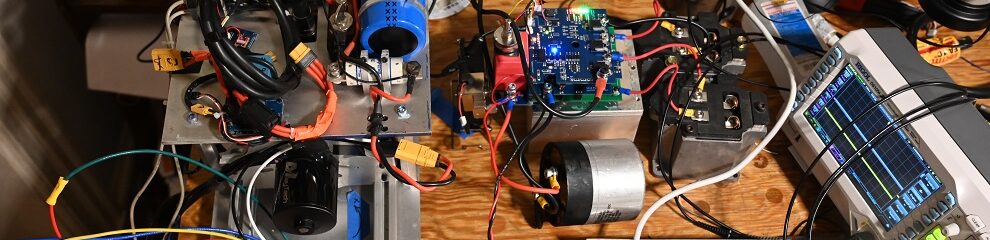

Hey all, time for a long overdue life update.
What ties together gas engines, buck converters, brushless motors, and steam engines? The ability to convert energy from one form to another potentially more useful form, be it heat to mechanical, electrical to mechanical, or electricity from one voltage to another. I have long been fascinated by energy and power. When one uses a lot of energy in their daily life, it becomes natural to ask, where does it come from? In New England, most energy these days comes from natural gas. But a nonzero, and rising, fraction comes from renewable sources, such as wind, solar, and hydro power. Hydro power has always captured my imagination, where the flow of water from a river is used to do useful mechanical work. There is some beauty in the combination of energy and the flow of water.
Anyways, fast forward to July 2024, and my longtime friend Aaron Sliski found a hydroelectric dam for sale, of all places, on Facebook marketplace. The dam was a roughly 80kW site located in Ashland, NH. Aaron’s father, Alan, also had a longtime interest in hydro power as well, so the three of us stretched our finances to form an LLC and purchase the dam. This project is mostly for fun, but I am betting it will work out financially as well. I think electricity prices will likely double in the next 10 years, given electric cars, heat pumps, hotter summers, AI model training, nuclear power stations closing down, etc. But, we’ll see if those bets work out.
Anyways, we purchased the site, located in beautiful Ashland, NH. Lake-front property!

Some history: the dam was originally built in the 1860s to power a paper mill. It was originally hydromechanical, but was converted to hydroelectric at some point. A major refurbishment happened some time in the 1980s, which is when the current turbine was installed. The turbine unit was manufactured by Hydrolec, a defunct company from Canada. The first thing we heard about this unit was that it was blown up, and that it had a set of variable pitch blades controlled by pressurized hydraulic oil inflating a truck airbag at the front of the unit. This all sounded incredibly bad. It turned out however, that the unit was not too bad overall, and that with a bunch of rust remover and an added thrust bearing, things went together alright. We ended up getting the old turbine patched up well enough and got it installed in the facility. Aaron’s blog covers this in pretty good detail. I’ll focus this blog on my electronics, which was my contribution to the project.
Here is the dam and turbine building. So beautiful!

The dam was officially purchased at the end of the summer. The next step was deciding a division on labor: Aaron became the mechanical guy, and Alan became the paperwork guy, and I became the electronics guy.
Some more detail on the site…
In terms of hydraulic capacity, the site runs about 60-100CFS (cubic feet per second) and has 18ft of head, if all the flash boards are installed. At 80 CFS, with an efficiency of 60%, we predict an output power of 73kW. Apparently we found an old manual which says the turbine is 60% efficient. The flow does sometimes surge to several hundred CFS, but that is rare.
Power-wise, the site has three 37.5kW pole pigs, which step down the 12 kV line to 480V. So, the total export capacity is 112.5kW. The 480V is a delta connection, so this is line-to-line voltages, and there is no neutral coming to the site. The site additionally has 120/240V single phase service to power the building. I guess at some point these could be combined, but it is nice to have them separate for now.

Somehow, the site also has three meters attached to the 480. Why? Unknown….

Here is the business end of the facility. The penstock is a 52.5″ diameter steel tube which tapers down to a 3′ turbine section. The turbine is mounted at a 45 degree angle sticking out of the wall of the turbine house.

A gigantic butterfly valve inside the penstock controls water to the facility. This valve is electrically operated with a 48V wound-field motor. A bunch of car batteries in series provide power to run the motor. The batteries are important: if the facility suddenly loses all grid power, the valve must close to shut off the water. Therefore, the batteries are mandatory to provide power in this situation. It is also worth mentioning that the valve cannot close very fast. It takes about 30 seconds for the valve to go from fully open to fully closed. Furthermore, it is actually desirable to close this valve slowly, otherwise you will get water hammer.

Here is the turbine. We think the whole turbine unit weighs probably 8000 lbs. Here, Aaron is shown using a brass rod as a gong to hammer the propeller onto the motor unit. The bearings didn’t like it probably, but hey, it worked and the bearings were fine.

It is also worth noting the way the turbine is controlled. Hydro sites have to generate power with a variable flow, and there are many ways of accomplishing this. The original method was that the unit was filled with pressurized oil, which inflated a truck airbag spinning on the front of the prop, which was connected to a series of linkages which altered the propeller pitch. We originally thought that this was a complete trash system. However, upon further thought, my opinion has changed. Given the technology of the time this turbine was built, this isn’t a bad system, given that there are no weird thrust bearings and most moving parts are submerged in the oil instead of the water, preventing rust. However, in 2025, we have the magic of VFDs, so we can just vary the motor speed. Maybe some marginal efficiency could be gained by varying the prop pitch, but it probably isn’t worth it. We almost considered getting this system going again, but Aaron found we were missing the “Jesus bolt”, so we proceeded with fixed pitch.
The fixed pitch does create one critical problem though. If the grid is instantaneously disconnected, the turbine has no load, and it is still is producing substantial torque. In the original pressurized oil system, the pressure could just be popped to flatten the blade pitch very quickly. However, with the fixed pitch, this is no longer possible. Neglecting fluidic losses, I calculated that if the grid drops and the water continues to flow, the induction motor rotor would likely spool up to detonation speed in about a second. The valve takes about 30 seconds to close, which is too long. It is likely that fluidic resistance is substantial, which will help to prevent overspeed, but we have to plan for the worst case scenario. More on this later- we need to figure out a way to turn the motor into a brake.
The turbine motor is a gigantic 3-phase induction motor. This thing is immersed in oil, which is then under water, so you could say it has good cooling. The motor apparently weighs about 1200lbs.

Let’s get to work…..
My first task was to look over the existing electronics cabinet. It was all installed in the 1980s, and controlled by a PLC with a dial-up phone connection. All components made well before I was born.

The dam control system has two major functions: Firstly, to turn on the generator properly and shut it down if anything goes off-nominal, and secondly, to servo the power level to extract maximum power for a given amount of water flow. The existing control system was apparently not too bad early in life, however we heard that in latter years things went downhill, with either substantial water going over the dam or the stream running dry. It also came with zero manual, so even if we did want to get it going again, that was a tall ask.

A plan began to form. I’ve always thought it would be fun to have a nucleo control something big. So, a plan was hatched.
Read more in the next post…………
